Conservation and history of Maliau Basin
Sabah lost an enormous amount of primary forest in the second half of the twentieth century. Maliau did not, and the reason is less noble than it sounds: for most of that period, nobody could get in.
Maliau Basin was effectively unknown to the outside world until a pilot nearly flew into its escarpment in 1947. Yayasan Sabah designated it a conservation area in 1981, the same year as Danum Valley; the first scientific expedition into the interior came in 1988; and in 1997 the Sabah State Legislative Assembly gazetted it a Class I Protection Forest Reserve, the highest protection available. The Studies Centre was developed with Danish (DANIDA) support. Roughly one third of the 588.4 km² area is open to visitors and less than half has been properly explored.
Managed by Yayasan Sabah's Conservation and Environmental Management DivisionGeography protected Maliau before anyone chose to
The basin is walled on almost every side by cliffs and near-vertical slopes, with a single narrow outlet in the south-east. That makes it extremely difficult to enter, impossible to farm, and uneconomic to log with the equipment of the era.
The consequences are stark. No permanent settlement was ever established inside the basin. No logging concession worked it. It stayed off the map long after the rest of Sabah had been surveyed, and the first proper scientific expedition into the interior took place only in 1988.
Even now, roughly a third of the basin is open to visitors and less than half has been properly explored by researchers. The highest point on the northern rim, above 1,675 metres, has still not been accurately surveyed.
Maliau Basin conservation timeline
| Year | Event |
|---|---|
| 1981 | Designated a conservation area under Yayasan Sabah's long-term forest management plan |
| 1988 | First major scientific expedition into the interior |
| 1997 | Gazetted a Class I Protection Forest Reserve by the Sabah State Legislative Assembly |
| Later | Boundary extended to take in forested land east and north of the rim, including Lake Linumunsut |
Maliau and Danum Valley were protected in the same year, 1981, under the same plan. What happened next diverged sharply, and that divergence is the most interesting thing about both places.
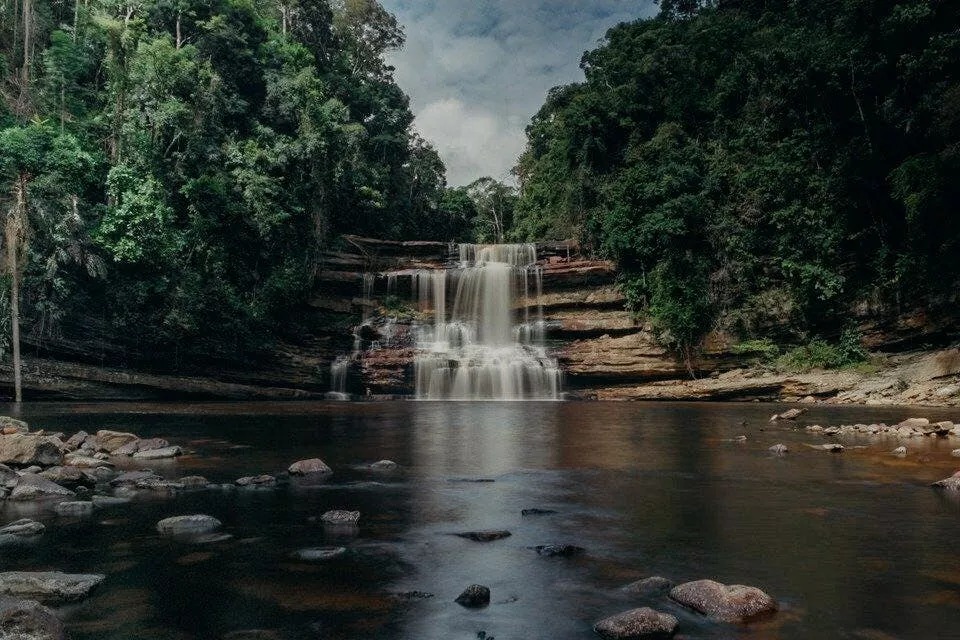 img/history-primary-forest.jpgUnlogged primary forest inside the basin21/9
Why Maliau and Danum ended up so different
Danum Valley became a world-famous research station with a comfortable lodge, a canopy walkway, and a two and a half hour transfer from an airport town. It is one of the best-known rainforest destinations in Southeast Asia.
Maliau deliberately did not. Access remained restricted, visitor numbers capped, and the interior reachable only on foot with camps that provide a bed and a pillow. The friction was retained as the conservation mechanism rather than engineered away.
Class I Protection Forest Reserve is the highest level of protection in Sabah's forest classification. Logging, hunting and agriculture are prohibited outright, and that applies to everyone, researchers included. The full comparison of the two reserves is here.
The Studies Centre and the research mission
The Maliau Basin Studies Centre was developed by Yayasan Sabah with Danish development assistance, and functions as the hub for research, conservation work, environmental education and ecotourism inside the conservation area.
That ordering matters. Tourism is the last item on the list, not the first. The centre hosts university field courses — groups from Sheffield, Griffith and Otago among them — and visitors share the facility with researchers rather than the other way round. It reads as a field station that takes guests, which most people find is the appeal.
A note on dates. Sources conflict on when the centre opened, with some describing a Yayasan Sabah and DANIDA project from 1999 and others giving a 2011 opening. The facility may well have been developed in phases. We have not been able to resolve it against a source worth citing, so we have described the partnership rather than assert a year.
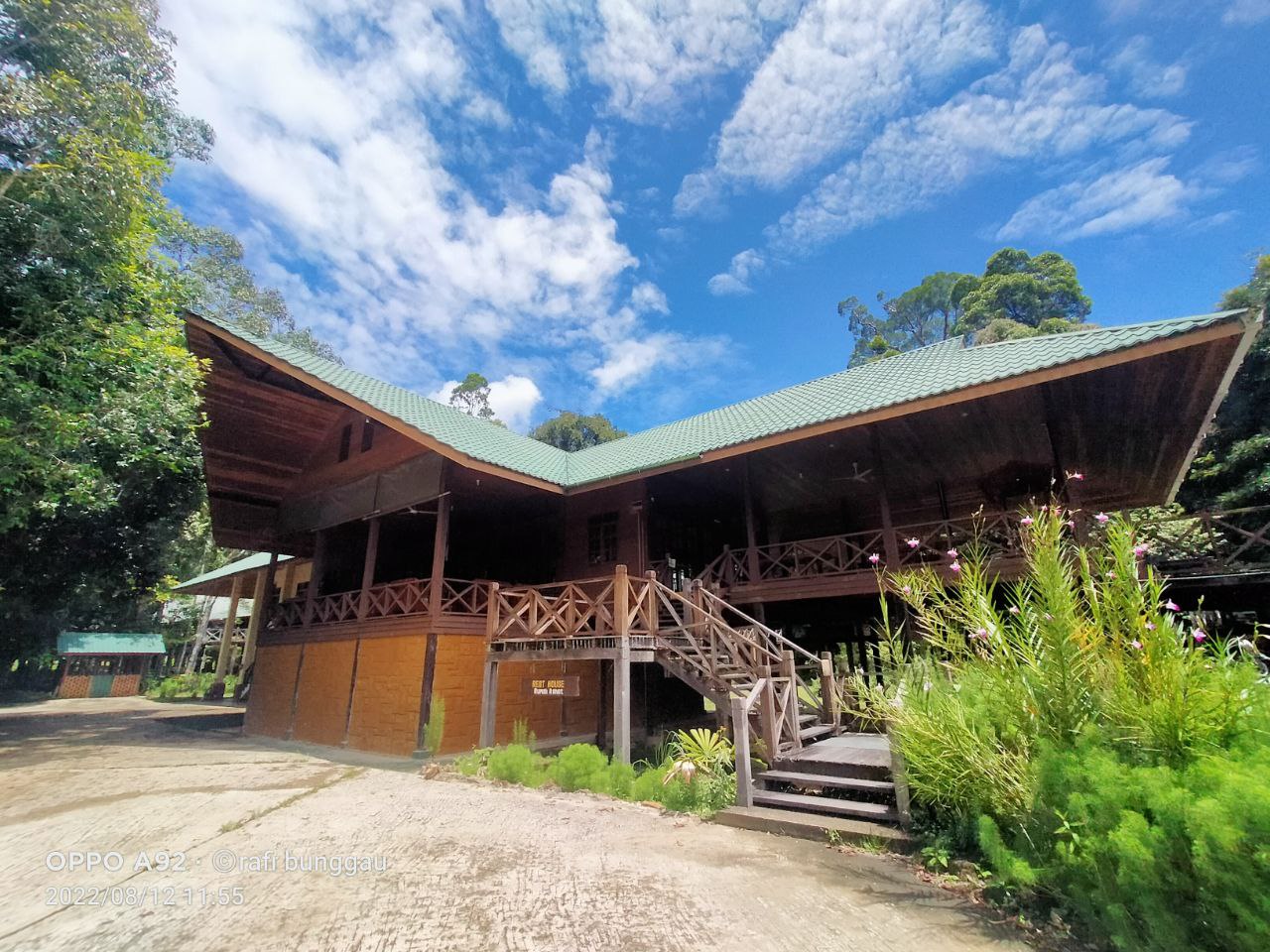 img/history-studies-centre.jpgMaliau Basin Studies Centre buildings3/2
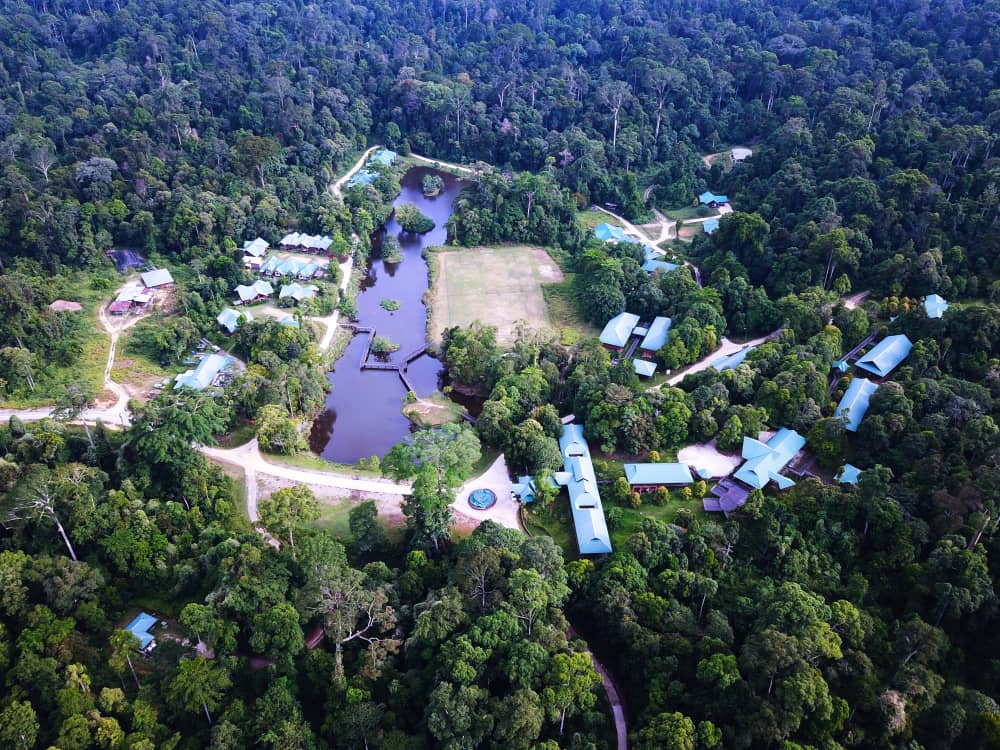 img/history-researchers.jpgResearchers on a field course at the centre3/2
Why Maliau Basin matters beyond its boundary
- Water. An intact forested catchment regulates flow into the lowlands, buffers flood peaks through infiltration, and delivers clean water into the Kuamut and then the Kinabatangan, Sabah's longest river.
- Species. Eighty-two mammals, close to 300 birds, over 30 amphibians, an estimated 1,800 tree species of which several dozen are formally listed as endangered, nine pitcher plant species and more than 80 orchids.
- A baseline. Unlogged primary forest across several habitat types is scientifically valuable precisely because it is a reference against which disturbed forest can be measured.
- The unknown. Expeditions keep adding records, which is unsurprising when less than half the area has been properly explored.
What conservation asks of visitors
The briefing at the Studies Centre covers the rules, usually alongside an introductory video. They are short and they are enforced.
- No collection of any kind — plants, animals, or geological samples.
- Stay with your guide and on the trail. Heath forest ground cover is fragile and slow to recover.
- Carry your own litter out of the camps. There is no waste infrastructure in the interior.
- Respect trail closures. Made on safety grounds, and not negotiable.
- Accept the permit system rather than working around it. Capped visitor numbers are the mechanism, not an inconvenience. How permits work.
Four packages, Malaysian and international rates side by side, with what each one includes.
Conservation and history questions
When did Maliau Basin become protected?
It was designated a conservation area in 1981 under Yayasan Sabah's long-term forest management plan, and gazetted a Class I Protection Forest Reserve by the Sabah State Legislative Assembly in 1997, the highest level of protection in Sabah's forest classification.
Who manages Maliau Basin?
Yayasan Sabah, through its Conservation and Environmental Management Division, which also administers the permit system required for entry.
When was Maliau Basin first explored?
The first proper scientific expedition into the interior took place in 1988. Even now less than half the conservation area has been properly explored and the highest point on the northern rim has not been accurately surveyed.
Why was Maliau Basin never logged?
Because it was effectively impossible to enter. The basin is walled by cliffs and near-vertical slopes with a single narrow outlet, making it uneconomic to log, impossible to farm, and never permanently settled.
What is a Class I Protection Forest Reserve?
The highest level of forest protection in Sabah's classification system. Logging, hunting and agriculture are prohibited outright, and the restriction applies to everyone including researchers.
Why are visitor numbers limited at Maliau Basin?
Because capped access is the conservation mechanism. Permits are issued in advance by Yayasan Sabah, camp capacity is deliberately limited, and roughly a third of the basin is open to visitors at all.
Visit within the system
Permits, guides and approved itineraries are how access works here. We will handle the process.
Enquire How permits work