What to pack for Maliau Basin
The camps give you a bed and a pillow. No blanket, no towel, no power, no hot water. Everything else you carry. This is the full list with the reasoning, because knowing why an item is on it is what stops you leaving it behind.
A 40-litre pack you can carry all day; broken-in boots or Adidas Kampung; leech socks; two or three sets of quick-dry clothes and one dry set for camp; a sleeping bag and quick-dry towel for the trekking camps, which provide only a bed and pillow; a battery head torch, since there is no power in the interior; dry bags for everything; and more spare batteries than you think. Warm layer for nights at Nepenthes Camp, 945 m. Studies Centre stays need far less — proper rooms and power.
Keningau, on the road in, is the last place to buy anythingThe Maliau Basin packing list, in order of consequence
Footwear
Hiking boots, or Adidas Kampung. The rubber-studded local shoe grips wet roots and mossy rock better than most imported trekking boots and costs a fraction as much. Any shoe shop in Sabah stocks them, and Keningau is your last chance to buy on the way in. If you bring boots, bring ones already broken in. A four-day trek is the wrong place to discover a hot spot.
Leech socks
Or football socks as a workable substitute. These appear on every operator packing list for a reason: leeches are constant rather than occasional, and considerably worse in wet months. They are harmless, but pulling them off your ankles at every rest stop wears thin fast. Bring spares. Wet socks stay wet — there is nowhere to dry anything at the camps.
A 40 litre rucksack or larger
You carry your own kit between camps. Forty litres is the working minimum. A rain cover is not optional, and a bin liner inside the pack is better insurance than any cover.
Sleeping bag
No blanket is provided. Nepenthes Camp sits at 945 metres and nights there are noticeably cooler than the Studies Centre. A lightweight bag or liner rated for mild conditions is enough; you are not camping in the cold, you are camping without bedding.
A battery head torch
Battery, not rechargeable. There is no power at the camps to charge anything from. Bring spare batteries. A head torch rather than a hand torch, because you will want both hands on the descents and at the river crossings.
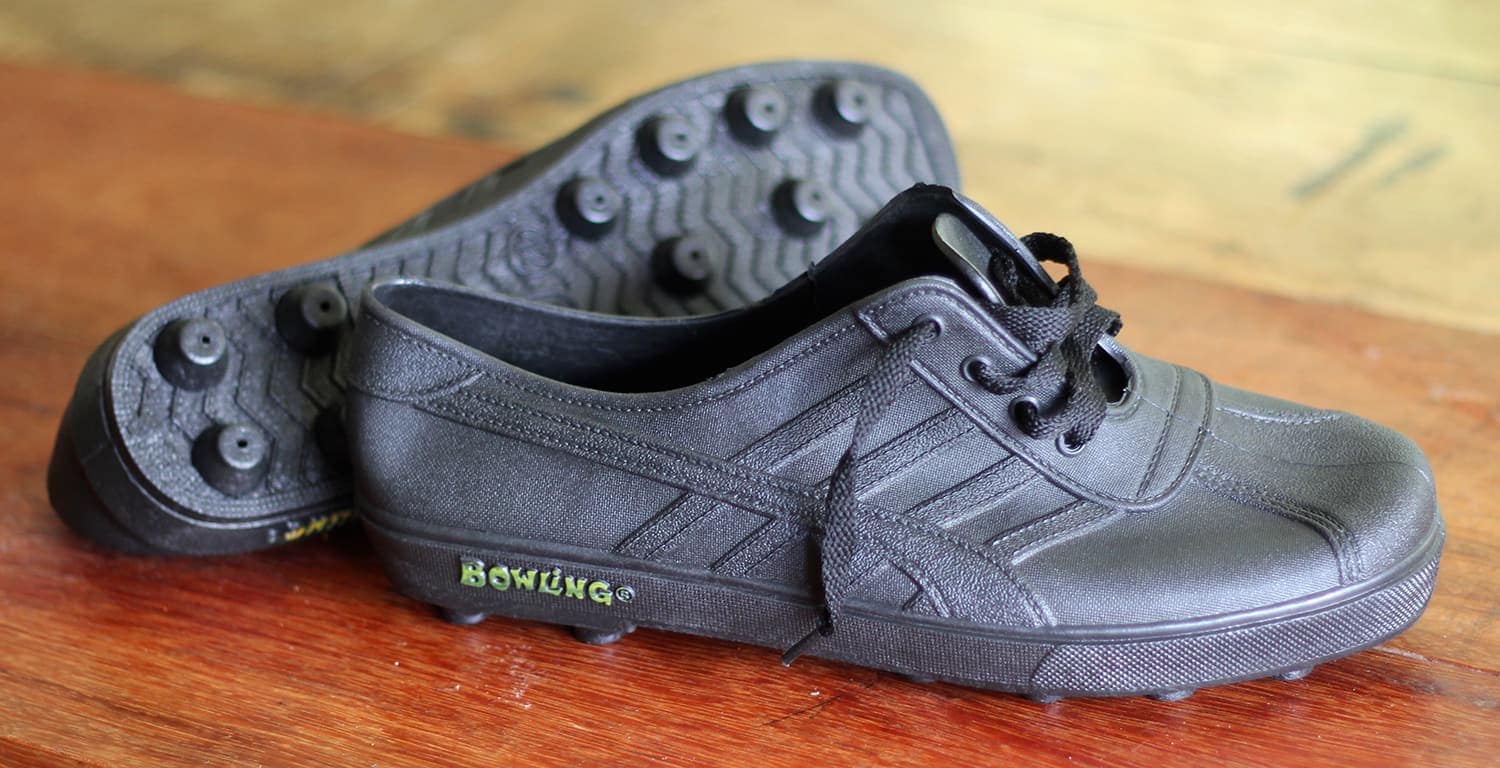 img/pack-adidas-kampung.jpgAdidas Kampung rubber-studded trekking shoes3/2
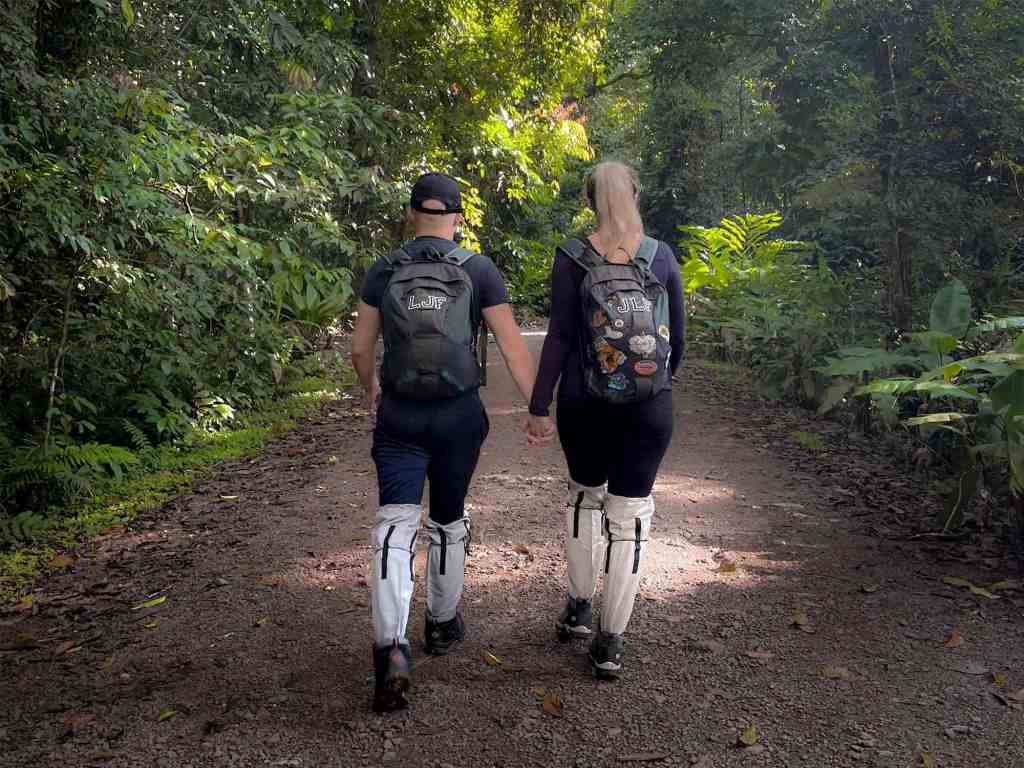 img/pack-leech-socks.jpgLeech socks worn over trekking trousers3/2
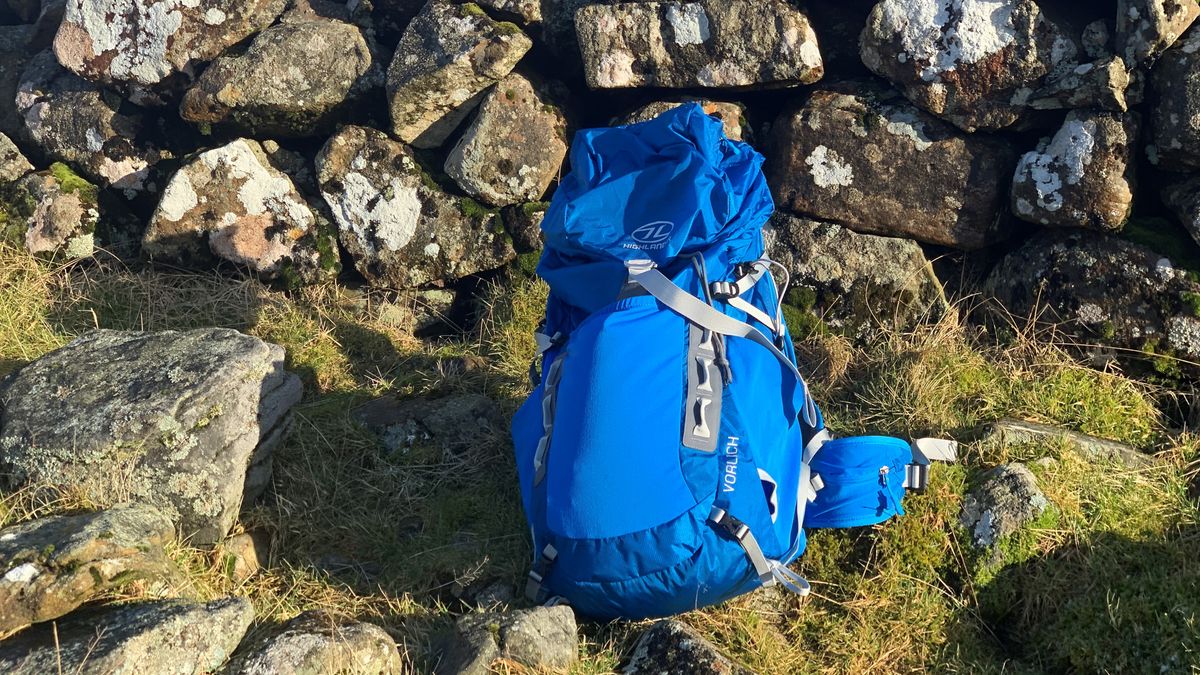 img/pack-rucksack.jpg40 litre rucksack packed for the trail3/2
What to wear for a Maliau Basin trek
Three sets is the standard advice: one to trek in, one to sleep in, one spare. The trekking set will be wet by the first rest stop and will stay wet. Keeping the sleeping set genuinely dry, in a sealed bag, is the single thing that most improves a multi-day trek in Borneo.
- Trekking trousers over shorts. Leeches, thorns, and sun on exposed sections. Quick-dry synthetic, not cotton.
- Long sleeves for the evening. Mosquito activity and cooler montane nights.
- A light jacket. For the camps at altitude, in every month of the year.
- Raincoat or poncho. A poncho that covers the pack is more useful than a fitted jacket.
- Slippers or sandals for camp. Getting out of wet boots at the end of a day matters more than it sounds.
- Quick-dry towel. None is provided.
What not to bring. Cotton anything you intend to wear on the trail. Jeans. New boots. A rechargeable-only torch. A suitcase — you can leave a bag at the Studies Centre, but what goes into the interior goes on your back.
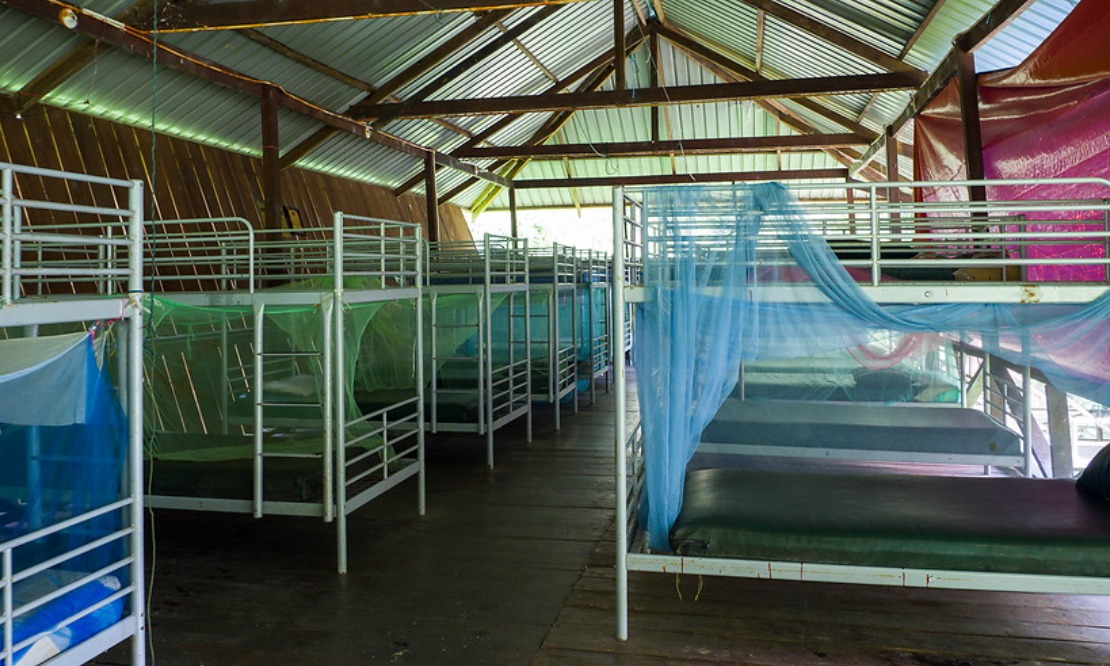 img/pack-camp-kit.jpgKit laid out on a camp bunk21/9
Kit, health and documents
Water and hydration
A water bottle of at least one litre. Light rather than insulated — insulation is dead weight in a climate that never gets cold enough to need it. Cooks travel with the group and water is available at camps.
Dry bags
For the sleeping set, electronics, documents and anything that must stay dry. Dedicated dry bags are best; heavy-duty bin liners work. Assume everything not in one will get wet.
First aid and medication
A basic kit: plasters, blister treatment, antiseptic, antihistamines, painkillers, plus any personal medication in quantities to cover the whole trip. There is no pharmacy and no way to get to one quickly.
Insect repellent
DEET-based. Malaria risk across Sabah's towns and tourist areas is low but higher in deep interior rainforest, and dengue is present in Borneo generally, carried by daytime mosquitoes. Speak to a travel clinic before you go rather than taking any website's word for it, including this one.
Documents
Passport, and for Malaysians a valid identity card — you need it to claim the resident rate and the tourism tax exemption. Personal travel insurance is not included in any package and this is not the trip to skip it on. Help is hours away, not minutes.
Cameras
Packages include a non-DSLR camera fee. Bringing a DSLR attracts a separate charge that is not in your package price. Confirm the current amount with your operator when you book. Bring more memory cards than you think you need and spare batteries, because there is nothing to charge from in the interior.
If you are staying at the Studies Centre instead
Most of the above relaxes considerably. The Studies Centre has proper rooms, proper beds and running water, so the sleeping bag, the head torch batteries and the three-sets discipline all become optional rather than essential.
What still applies: leech socks, decent footwear, a rain layer, DEET, a light jacket for the evenings, insurance, and the DSLR fee. The forest does not get gentler because your bed did.
Four packages, Malaysian and international rates side by side, with what each one includes.
Maliau Basin packing questions
What do I need to pack for Maliau Basin?
Hiking boots or Adidas Kampung, leech socks with spares, a 40 litre rucksack, a sleeping bag, a battery head torch, three sets of clothing, a rain layer, a quick-dry towel, dry bags, a one litre water bottle, DEET repellent, a basic first aid kit and personal medication. Camps provide a bed and a pillow only.
Do the Maliau Basin camps provide bedding?
No. Camps provide a bed and a pillow. There is no blanket, no towel, no power and no hot water. You carry your own sleeping bag and towel.
Are leech socks necessary at Maliau Basin?
Yes. Leeches are constant rather than occasional and worse in wet months. Leech socks or football socks appear on every operator packing list. They are harmless but persistent, so bring spare pairs as there is nowhere to dry anything.
What shoes are best for the Maliau Basin trek?
Broken-in hiking boots, or Adidas Kampung, the rubber-studded local shoe that grips wet roots better than most imported boots and costs far less. Sabah shoe shops stock them and Keningau is the last chance to buy on the way in.
Is there electricity at the Maliau Basin camps?
No. Bring a battery-powered head torch rather than a rechargeable one, plus spare batteries, and expect no way to charge a phone or camera in the interior.
Do I need a sleeping bag for Maliau Basin?
For the trekking itineraries, yes, because no blanket is provided. Nepenthes Camp sits at 945 metres and nights are cooler than at the Studies Centre. A lightweight bag or liner is sufficient. Studies Centre stays do not require one.
Is there an extra charge for cameras at Maliau Basin?
Packages include a non-DSLR camera fee. Bringing a DSLR attracts a separate charge that is not included in the package price, so confirm the current amount with your operator when booking.
Do I need malaria tablets for Maliau Basin?
Speak to a travel clinic rather than relying on a website. Malaria risk across Sabah's towns and tourist areas is low but higher in deep interior rainforest, and dengue is present in Borneo generally. DEET repellent, long sleeves in the evening and a net where provided all help.
Not sure what your itinerary requires?
The list differs considerably between a Studies Centre stay and the full trekking loop. Tell us which you are considering and we will send the right one.
Ask us Read the trek loop