Bornean Pygmy Elephant
Elephas maximus borneensisPresent, and occasionally encountered on access roads during night drives rather than on the trails.
Occasional
Eighty-two mammal species confirmed, close to 300 birds, over 30 amphibians. All genuinely there, and all genuinely hard to see. This page is about the gap between those two facts, because most Maliau wildlife pages skip it.
Eighty-two confirmed mammal species including Bornean pygmy elephant, orangutan, Sunda clouded leopard, Malayan sun bear, Bornean gibbons and bearded pigs; close to 300 bird species including the Bornean Bristlehead, Bulwer's Pheasant and Giant Pitta; and over 30 amphibians. Sightings are far less predictable than at Danum Valley because the animals are not habituated and the forest is dense. Gibbons heard and a bearded pig seen is a normal outcome. The Sumatran rhinoceros is extinct in Malaysia and no longer present.
Studies Centre packages with night drives see more than the treks doThree things work against you, and none of them are bad luck.
The animals are not habituated. Maliau has no lodge-based feeding, no long-running research station with decades of daily human presence in one spot, and very few visitors. Wildlife here behaves as wildlife does where it has not learned that people are harmless furniture.
The terrain is dense and vertical. Primary forest with a closed canopy, steep slopes and heath forest thickets. Sightlines are measured in metres.
You are walking, not sitting. A group of trekkers moving through forest with packs is the least effective wildlife-observation method there is. The Studies Centre packages, with night drives and static observation, actually produce better sightings than the treks do.
The honest benchmark. A Maliau trek where you hear gibbons calling, see a bearded pig and nothing larger is a normal outcome, not a disappointing one. If reliable large-mammal sightings are what you want, Danum Valley is the better destination and we would rather say so.
Eighty-two species are confirmed inside the conservation area, and the figure keeps moving because expeditions keep finding things.
Present, and occasionally encountered on access roads during night drives rather than on the trails.
Occasional
Confirmed resident. Expect to find a night nest more often than the animal that built it.
Uncommon
Confirmed and almost never seen. Night drives on the access road are the realistic chance.
Rare
Present. Claw marks on trees are the usual evidence rather than the bear.
Rare
Bornean gibbons, heard far more often than seen — the dawn calling is one of the genuine highlights of sleeping in the interior. Red-leaf monkeys along the Nepenthes to Ginseng leg. Bearded pigs, which are common and unbothered. Sambar and barking deer. Civets and leopard cat on night walks and drives.
Banteng and the elusive Bay Cat have been recorded, generally on the fringes of the conservation area rather than along the trekking routes.
A number of Maliau pages still list the Sumatran rhinoceros among the wildlife you might see. Historical records for the basin exist, but the species was declared extinct in Malaysia after the last known individual died in 2019. Any page still offering you rhino is working from material that has not been checked in years, which is worth remembering when you read the rest of it.
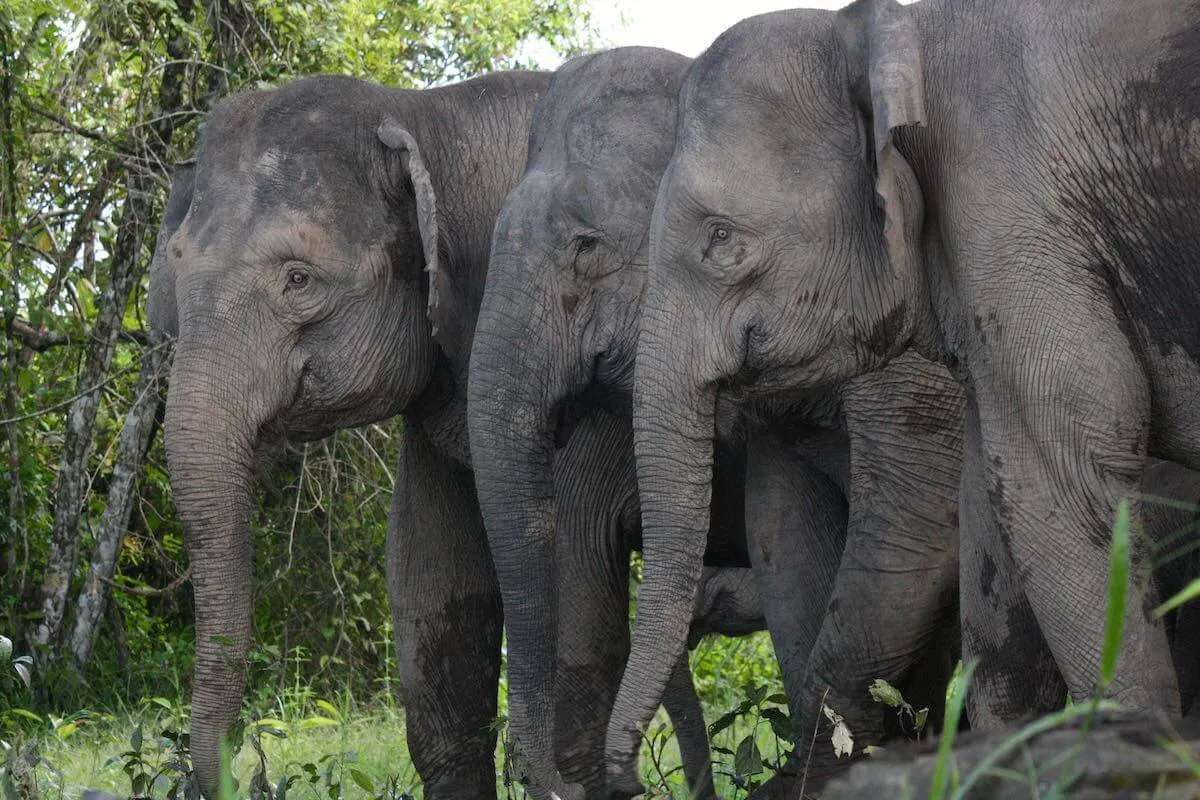 img/wl-elephant.jpgBornean pygmy elephant on the access road3/2
 img/wl-gibbon.jpgBornean gibbon in the canopy3/2
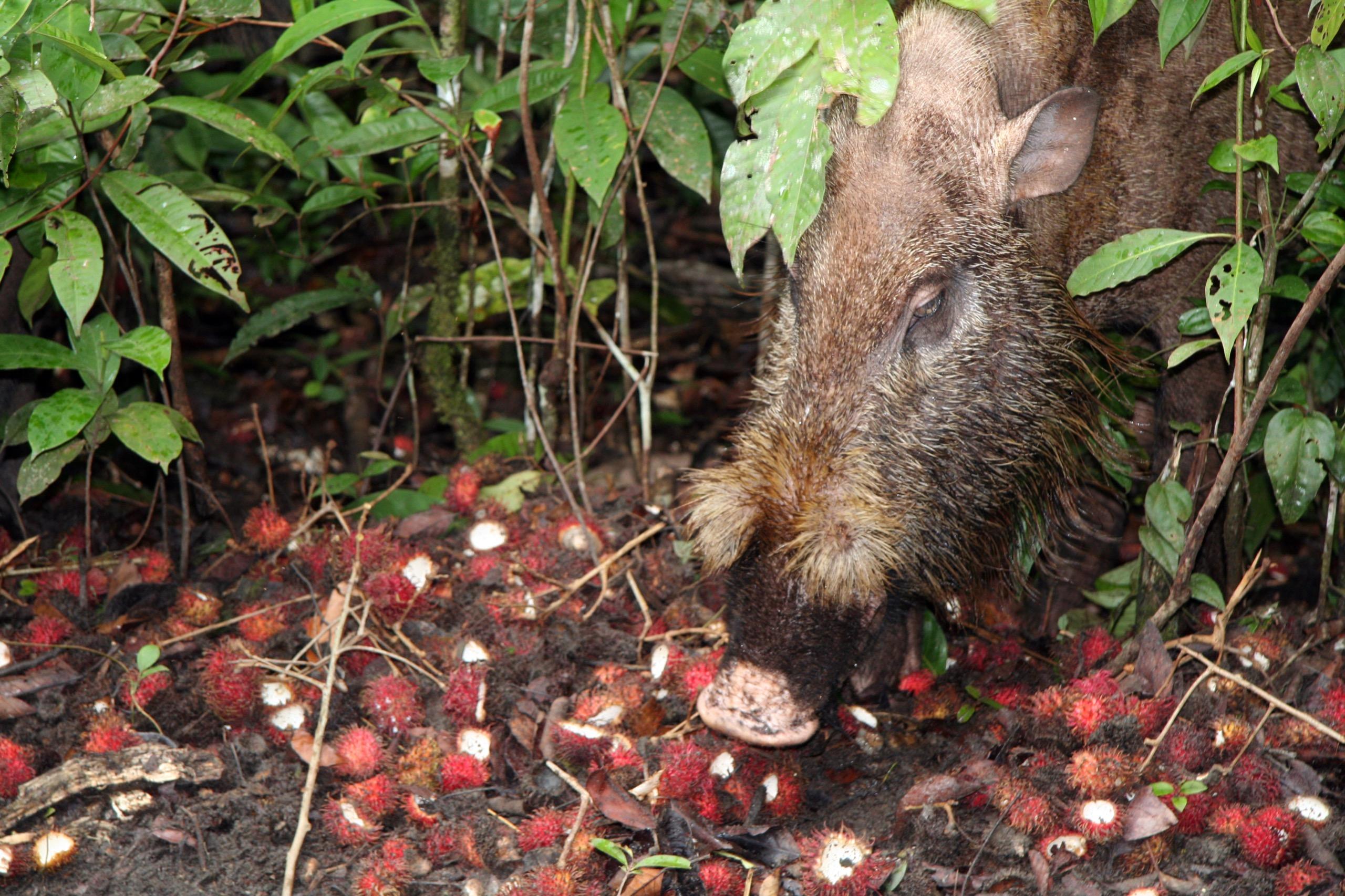 img/wl-bearded-pig.jpgBearded pig on the forest floor3/2
Close to 300 species recorded, and this is where Maliau genuinely beats its more famous neighbour. The habitat mix — lowland dipterocarp through lower montane to heath forest inside one catchment — supports species otherwise found only on Mount Kinabalu and Trus Madi. Target birds include the Bornean Bristlehead, Bulwer's Pheasant, Giant Pitta and Bathawk. Full birding guide here.
Over 30 species recorded, including a frog that breeds inside pitcher plants. The tea-coloured water is highly acidic and low in nutrients, which supports very few fish — and that absence of predators is part of why the frogs do so well.
Several hornbill species occur, and evening calling is a regular feature. Sources differ on the exact species count for the conservation area, so we have not quoted a number rather than pick the one we prefer.
 img/wl-night-drive.jpgNight drive spotlighting on the access road21/9
Four packages, Malaysian and international rates side by side, with what each one includes.
Eighty-two mammal species are confirmed, including Bornean pygmy elephant, orangutan, Sunda clouded leopard, Malayan sun bear, Bornean gibbons, red-leaf monkeys and bearded pigs. Close to 300 bird species and over 30 amphibians have also been recorded.
Possibly, but do not count on it. Orangutans are confirmed residents but occur at far lower densities than at Danum Valley and are not habituated to people. Finding a night nest is more likely than seeing the animal.
No. Historical records exist but the species was declared extinct in Malaysia after the last known individual died in 2019. Pages still listing rhino among Maliau's wildlife have not been updated.
Danum Valley, clearly, for large mammals. It has higher recorded diversity at roughly 124 mammal species and considerably higher encounter rates. Maliau competes on birding, plants and amphibians rather than on mammal sightings.
The four-day Studies Centre itinerary. It adds the Manggaris and Avian trails and a second night drive over the three-day version. Centre-based packages produce better sightings than the treks because static observation and night drives beat walking through forest with a pack.
Confirmed present but very rarely seen. Night drives along the access roads are the realistic chance, and it is a small one.
Tell us what you hope to see and we will say honestly which package fits, and whether Maliau is the right reserve for it.
Ask us Birding guide